Active Pharmaceutical Ingredients (APIs): Types, Uses & How to Choose an API Supplier in India
"Discover the importance of Active Pharmaceutical Ingredients (APIs) in medicine manufacturing. This guide explores API types, applications, quality standards, and essential tips for choosing a reliable API supplier in India. Learn how Pharma Bridge supports pharmaceutical businesses with their raw material sourcing needs."
Every medicine begins with an important component: the ingredient responsible for its intended therapeutic effect. Whether it's a tablet, capsule, injection, or another pharmaceutical formulation, the quality of this ingredient plays a major role in the finished product.
This ingredient is known as an Active Pharmaceutical Ingredient (API).
For pharmaceutical businesses, choosing the right API is only one part of the process. Finding a dependable supplier who understands product specifications, documentation requirements, and consistent sourcing is equally important.
India has an established pharmaceutical industry, and APIs are an essential part of its supply chain. However, with different products, grades, and sourcing options available, purchasing teams need to evaluate suppliers carefully.
In this guide, we'll explore what APIs are, their different types, how they are used, and what businesses should consider when selecting an API supplier in India.
What Is an Active Pharmaceutical Ingredient (API)?
An Active Pharmaceutical Ingredient is a substance used in a pharmaceutical product to produce its intended pharmacological activity or another direct effect in the diagnosis, treatment, mitigation, or prevention of disease.
In simple terms, an API is the component that provides a medicine's intended active effect.
For example, in a paracetamol tablet, paracetamol is the active ingredient. Other ingredients help give the tablet its shape, stability, and suitable performance.
APIs are used in different pharmaceutical dosage forms, including tablets, capsules, oral liquids, topical formulations, and injectable medicines.
The required API specifications depend on the formulation, intended use, applicable regulatory requirements, and approved manufacturing process.
For pharmaceutical manufacturers, sourcing the correct API is important because changes in material quality or characteristics can affect product consistency and regulatory compliance.
Why Are APIs Important in Pharmaceutical Manufacturing?
APIs are central to pharmaceutical formulations because they provide the intended therapeutic activity.
However, the presence of an active ingredient alone is not enough to ensure that a finished medicine is safe, effective, or suitable for use.
The API must meet appropriate quality specifications, and the finished product must be manufactured and controlled according to applicable requirements.
Several characteristics make API quality especially important.
Purity and Impurity Control
APIs must meet defined limits for relevant impurities.
These may include process-related impurities, degradation products, residual solvents, or other substances that require control.
Consistent Quality
Pharmaceutical manufacturers need materials that consistently meet their approved specifications.
Unexpected variations between batches can create additional testing, manufacturing, or quality assurance challenges.
Stability
Some APIs are sensitive to moisture, temperature, light, or other environmental conditions.
Appropriate packaging, storage, and handling help maintain material quality throughout its stated shelf life or retest period.
Regulatory Documentation
Pharmaceutical businesses may need documents such as Certificates of Analysis, specifications, and other applicable quality or regulatory information.
The required documentation varies by product, supplier, destination market, and regulatory context.
These considerations make supplier evaluation an important part of pharmaceutical raw material procurement.
Types of Active Pharmaceutical Ingredients
APIs can be classified in several ways, including their source, chemical structure, and manufacturing method.
Understanding these categories helps buyers recognise why different materials may require different quality controls.
1. Synthetic APIs
Synthetic APIs are produced through chemical synthesis.
Their manufacturing processes may involve multiple reaction, purification, and isolation steps.
These APIs are widely used across pharmaceutical applications.
Depending on the substance, quality control may include identity, assay, impurity testing, residual solvent analysis, and other specification requirements.
2. Biological APIs
Biological APIs are derived from biological sources or produced using biological processes.
Examples may include certain proteins and other biologically produced therapeutic substances.
Because biological materials can be structurally complex, their quality assessment may require specialised analytical methods and controls.
3. Fermentation-Derived APIs
Some active ingredients are produced through controlled microbial fermentation.
Fermentation may be followed by extraction, purification, and other processing steps.
These materials require appropriate controls for process consistency, impurities, and microbiological quality.
4. Plant-Derived APIs
Certain pharmaceutical active substances originate from plants.
They may be extracted, purified, or further processed to obtain the required active ingredient.
The quality of starting materials, extraction methods, and final specifications can influence the consistency of these APIs.
Each API category has its own technical considerations. Buyers should therefore evaluate the requirements of the specific material rather than assuming all APIs can be sourced and handled in the same way.
Common Applications of APIs in Pharmaceuticals
Active pharmaceutical ingredients are used across many therapeutic categories.
Some familiar examples include:
Paracetamol: Used as an active ingredient in medicines intended for pain relief and fever reduction.
Ibuprofen: A nonsteroidal anti-inflammatory drug used in formulations for pain, inflammation, and fever.
Metformin: An active ingredient used in certain medicines for managing type 2 diabetes.
Amoxicillin: An antibiotic active ingredient used in appropriate antibacterial formulations.
Omeprazole: Used in medicines that reduce gastric acid production.
These examples illustrate the range of API applications and do not represent a confirmed Pharma Bridge product catalogue.
Each ingredient has its own quality specifications, handling requirements, and regulatory considerations.
For procurement teams, identifying the correct material name is only the starting point. The required grade, specifications, documentation, and intended pharmaceutical use must also be confirmed.
API vs Excipients: Understanding the Difference
APIs and excipients are both important components of pharmaceutical formulations, but they perform different functions.
An API provides the intended pharmacological activity of a medicine.
An excipient is an ingredient used for purposes other than providing the primary therapeutic effect.
Depending on the formulation, excipients may support tablet formation, stability, dissolution, preservation, or administration.
For example, a tablet may contain an API alongside ingredients such as fillers, binders, disintegrants, and lubricants.
The combination of ingredients must be appropriate for the intended product.
For pharmaceutical businesses, both API quality and excipient quality matter. However, the technical specifications and qualification requirements for these materials may differ.
How to Check API Quality Before Purchasing
Quality verification is one of the most important steps in pharmaceutical raw material sourcing.
Before placing an order, buyers should confirm that the proposed API meets their technical and regulatory requirements.
Review the Certificate of Analysis (COA)
A Certificate of Analysis typically provides test results for a particular material batch against specified acceptance criteria.
Depending on the API, it may include information such as:
Identification testing
Assay or content
Related substances and impurities
Water content or loss on drying
Residual solvents
Other product-specific tests
A COA should be reviewed against the buyer's approved specifications.
Importantly, a COA is supporting documentation, not a substitute for supplier qualification or appropriate incoming-material testing.
Confirm the Required Specifications
Different customers may require different specifications for the same API.
Buyers should confirm the applicable pharmacopoeial or approved in-house specification, along with any additional requirements.
Relevant pharmacopoeial references may include IP, USP, or Ph. Eur., where applicable.
Check Storage and Packaging Requirements
Packaging should be suitable for the material and help protect it from relevant environmental conditions.
Buyers should confirm recommended storage conditions, packaging configuration, and any special handling requirements.
Verify Traceability
Batch identification, manufacturer information, and appropriate supply-chain records help support traceability.
This becomes especially important when investigating quality concerns or managing material recalls.
Evaluate the Supplier's Documentation
Depending on the product and transaction, additional information may be needed to support supplier qualification.
The availability and suitability of these documents should be confirmed before purchasing.
How to Choose a Reliable API Supplier in India
Selecting an API supplier in India requires more than finding a company that can provide a competitive quotation.
A suitable supplier should be able to support the buyer's product, documentation, delivery, and quality requirements.
Here are some important factors to evaluate.
1. Product Availability and Specifications
Start by confirming whether the supplier can source the exact API required.
Check the material name, grade, specifications, quantity, and any applicable packaging requirements.
A supplier offering a similarly named material may not necessarily be offering a suitable substitute.
2. Quality Documentation
Ask which quality documents are available for the specific material.
For example, buyers may require a batch-specific COA and other relevant supporting documentation.
The supplier should clearly communicate what can be provided rather than making broad claims about certifications.
3. Manufacturer and Supply-Chain Information
Understand whether the supplier is the original manufacturer, a distributor, or another supply-chain intermediary.
This distinction matters when evaluating traceability, regulatory documentation, and quality responsibilities.
A distributor can be a suitable sourcing partner, provided the supply chain is appropriately qualified and the required information is available.
4. Communication and Technical Clarity
A dependable sourcing process requires clear communication.
The supplier should be able to discuss material specifications, availability, packaging, documentation, and delivery expectations without unnecessary confusion.
5. Delivery and Handling
Some APIs require specific storage or transportation conditions.
Buyers should confirm how the material will be packed, handled, and transported.
6. Commercial Transparency
Before confirming an order, review the quotation carefully.
Check the unit price, quantity, applicable taxes, shipping arrangements, payment terms, delivery timeline, and any other commercial conditions.
Transparent communication helps reduce misunderstandings during procurement.
What B2B Buyers Should Know About Bulk API Purchasing
Bulk API purchasing involves additional planning compared with ordering small quantities.
Procurement teams need to balance commercial requirements with product quality and supply continuity.
Before placing a bulk order, consider the following:
Confirm the exact quantity. Purchase volumes should reflect manufacturing plans, inventory requirements, and suitable storage capacity.
Discuss batch availability. Understand whether the required quantity can be supplied from one batch or multiple batches.
Review documentation in advance. Confirm what documents are required and whether they can be provided for the material being supplied.
Plan realistic lead times. Availability and delivery schedules may vary depending on the API, quantity, and supply chain.
Consider storage requirements. Avoid purchasing quantities that cannot be stored under appropriate conditions.
Understand the supplier's quality process. Clarify how quality concerns, damaged packaging, or discrepancies will be handled.
These steps can help pharmaceutical businesses make more informed purchasing decisions.
Common Mistakes to Avoid When Buying APIs
Even experienced procurement teams can face challenges when sourcing pharmaceutical ingredients.
One common mistake is focusing entirely on price.
A lower quotation may seem attractive, but the material must still meet the buyer's specifications and documentation requirements.
Another mistake is assuming that the same API name always means the same product suitability.
Different manufacturers or grades may have different characteristics, specifications, or regulatory support.
Buyers should also avoid placing urgent orders without confirming availability and realistic delivery expectations.
Finally, supplier claims should be verified rather than accepted without supporting information.
A structured procurement process helps reduce avoidable risks and supports more consistent material sourcing.
Why Work with Pharma Bridge for Pharmaceutical Raw Material Sourcing?
Finding the right pharmaceutical raw material involves more than identifying a product name.
Businesses need to consider specifications, availability, documentation, packaging, commercial terms, and supply requirements.
Pharma Bridge focuses on pharmaceutical raw material supply, helping businesses explore sourcing options for their material requirements.
If your company is looking for an active pharmaceutical ingredient, the first step is to share clear details about the material you need.
This may include the API name, required grade, quantity, specifications, delivery location, and relevant documentation requirements.
Providing this information helps make the enquiry process more focused and efficient.
Pharma Bridge can then review the request against its available sourcing options and communicate the applicable product and commercial details.
Whether you're exploring a new raw material requirement or reviewing sourcing options for an existing product, clear specifications and proper documentation remain essential.
Conclusion
Active pharmaceutical ingredients are fundamental to modern medicines, and their quality is an important consideration throughout pharmaceutical manufacturing.
For buyers, understanding API types, applications, specifications, and quality documentation makes it easier to approach procurement with confidence.
Choosing among API raw material suppliers in India should involve careful evaluation of material suitability, supply-chain transparency, quality requirements, and commercial terms.
The goal is not simply to find an API at the lowest price. It is to identify a sourcing arrangement that meets your business's technical and operational needs.
At Pharma Bridge, we understand the importance of clear communication and informed pharmaceutical raw material sourcing.
Looking for Pharmaceutical Raw Materials?
Connect with Pharma Bridge to discuss your API requirements, required specifications, quantities, and sourcing needs.
Request a Quote | Enquire About API Availability
rmaceutical formulation, the quality of this ingredient plays a major role in the finished product.rmaceutical formulation, the quality of this ingredient plays a major role in the finished product.Pharma Bridge is a pharmaceutical raw material supply business. Buyers can contact the company to discuss their specific API requirements and confirm product availability and applicable documentation.
Have Formulation or Sourcing Requirements?
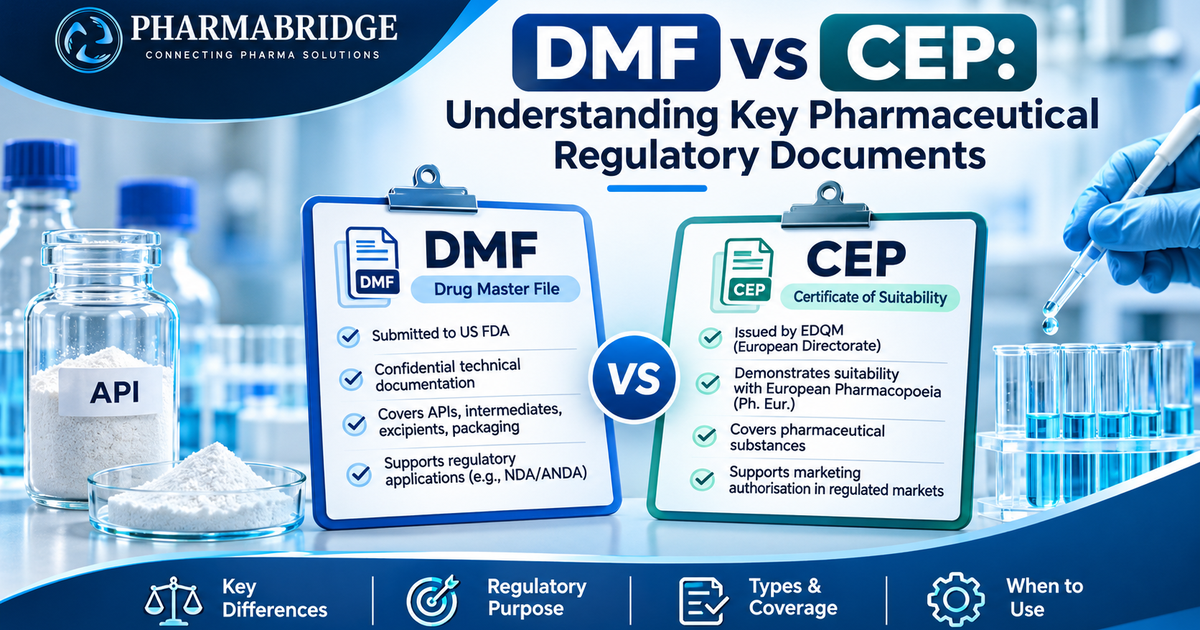
Inquire directly regarding batch pricing, regulatory dossiers (DMF, CoA, VQ), and evaluation samples.