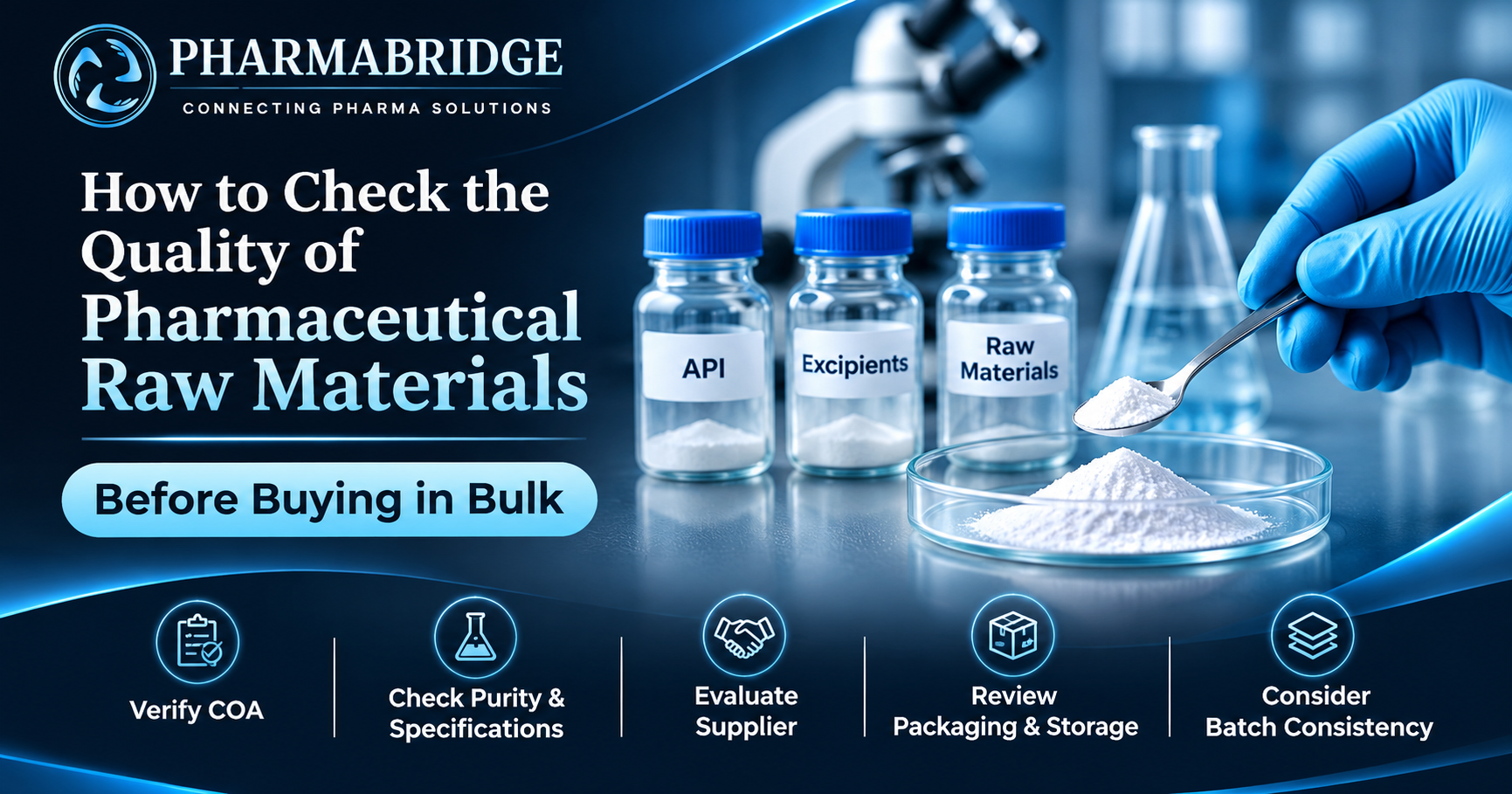
How to Check the Quality of Pharmaceutical Raw Materials Before Buying in Bulk
"Learn how to verify pharmaceutical raw material quality before bulk purchasing. Explore essential checks, including COA verification, purity, supplier evaluation, packaging, and batch consistency. Discover practical sourcing insights with Pharma Bridge – Connecting Pharma Solutions."
Buying pharmaceutical raw materials in bulk requires careful planning. While price and availability are important, quality should always be a priority. Poor-quality materials can lead to manufacturing delays, rejected batches, and additional costs.
Whether purchasing Active Pharmaceutical Ingredients (APIs), excipients, or other chemicals, businesses need to verify that materials meet their required specifications.
At Pharma Bridge, we understand the importance of reliable pharmaceutical raw material sourcing. This guide explains the essential quality checks buyers should consider before placing a bulk order.
Why Is Pharmaceutical Raw Material Quality Important?
Pharmaceutical raw materials play an important role in medicine production. Their quality can affect manufacturing consistency, product performance, and regulatory compliance.
Maintaining pharmaceutical raw material quality helps businesses reduce production risks and avoid unnecessary expenses.
Key benefits include:
Consistent production: Suitable materials support reliable manufacturing processes.
Regulatory compliance: Proper quality controls help meet applicable standards.
Reduced rejection risks: Early verification helps identify unsuitable materials.
Better procurement: Quality documentation supports informed purchasing decisions.
A structured quality-checking process helps businesses select materials that meet their technical requirements.
1. Check the Certificate of Analysis (COA)
A Certificate of Analysis (COA) is one of the most important documents to review before purchasing pharmaceutical raw materials.
It provides batch-specific testing information and helps buyers assess whether a material meets defined specifications.
A COA may include:
Product name and batch number
Identification and assay results
Purity and impurity information
Moisture content
Residual solvent results
Applicable quality specifications
Before purchasing, verify that the COA matches your required material grade and specifications.
Remember that a COA supports quality assessment but does not replace supplier qualification or required incoming-material testing.
2. Verify Purity and Material Specifications
Purity is an important factor when sourcing pharmaceutical ingredients, particularly APIs.
However, purity percentage alone cannot determine whether a material is suitable for manufacturing.
Buyers should also review identity, impurity limits, moisture content, and other relevant characteristics.
Depending on the product, specifications may follow recognised pharmacopoeial standards such as IP, USP, or Ph. Eur.
Always confirm that the offered material meets the specifications required for its intended application.
This helps reduce the risk of purchasing an unsuitable grade or formulation ingredient.
3. Evaluate the Pharmaceutical Raw Material Supplier
Selecting the right supplier is essential for dependable procurement.
When comparing API raw material suppliers in India, buyers should consider more than competitive pricing.
Important factors include:
Supplier background and business experience
Product availability and specifications
Quality documentation
Manufacturer and batch traceability
Communication and delivery arrangements
It is also important to understand whether the supplier is a manufacturer, distributor, or sourcing partner.
Pharmaceutical businesses should follow their applicable supplier qualification procedures before approving materials for use.
A transparent sourcing process helps buyers make more confident purchasing decisions.
4. Review Packaging and Storage Conditions
Pharmaceutical raw materials may be sensitive to moisture, temperature, light, or contamination.
Incorrect storage and handling can affect material quality, even when the product initially meets specifications.
Before buying in bulk, confirm the recommended storage conditions and packaging requirements.
Check whether containers are properly sealed, labelled, and suitable for transportation.
Buyers should also review shelf-life or retest information where applicable.
Proper storage planning is especially important when purchasing large quantities that may remain in inventory for extended periods.
5. Request Samples and Check Batch Consistency
For certain materials, requesting a representative sample before bulk purchasing can support technical evaluation.
Samples may be tested to assess identity, specifications, or suitability for the intended manufacturing process.
However, sample approval does not guarantee that every future batch will have identical characteristics.
Buyers should confirm batch identification, documentation availability, and traceability.
Regular supplier performance reviews and appropriate incoming-material controls help maintain confidence in repeat purchases.
For pharmaceutical businesses, consistency is just as important as initial material quality.
6. Compare Suppliers Beyond Pricing
Price is an important part of bulk procurement, but choosing the lowest quotation is not always the best decision.
When reviewing pharmaceutical chemicals suppliers in India, consider the overall value of the sourcing arrangement.
Compare material specifications, documentation availability, packaging, delivery timelines, and commercial terms.
A supplier offering a lower price may not necessarily provide the material grade or documentation required for your application.
Clear communication about minimum order quantities, transportation, and payment terms can also help prevent purchasing difficulties.
The objective should be to balance cost with material suitability and supply reliability.
7. Confirm Quality Requirements Before Ordering
Before finalising a bulk purchase, share complete product requirements with the supplier.
These should include the raw material name, required grade, specifications, quantity, packaging preferences, and delivery location.
Request relevant documentation and confirm availability before placing an order.
Once materials are delivered, the receiving and quality teams should inspect packaging, verify batch information, and complete the necessary testing and release procedures.
Clear purchasing requirements help reduce misunderstandings and support smoother procurement.
How Pharma Bridge Supports Raw Material Sourcing
Pharma Bridge – Connecting Pharma Solutions focuses on supplying pharmaceutical raw materials to businesses with specific sourcing requirements.
We understand that pharmaceutical buyers need clear product information, suitable specifications, and transparent communication throughout the purchasing process.
Businesses can contact Pharma Bridge with their API, excipient, or other pharmaceutical raw material requirements to discuss availability, quantities, documentation, and commercial details.
Our aim is to make pharmaceutical raw material enquiries more straightforward and help businesses explore suitable sourcing options.
Conclusion
Checking pharmaceutical raw material quality before bulk purchasing is essential for reducing procurement risks and supporting consistent manufacturing.
From COA verification and purity checks to supplier evaluation, packaging, and batch traceability, each step helps buyers make informed decisions.
At Pharma Bridge, we believe effective raw material sourcing begins with clear specifications and reliable communication.
Looking for pharmaceutical raw materials in bulk?
Connect with Pharma Bridge to discuss your product requirements and request a quotation.
Have Formulation or Sourcing Requirements?
Inquire directly regarding batch pricing, regulatory dossiers (DMF, CoA, VQ), and evaluation samples.