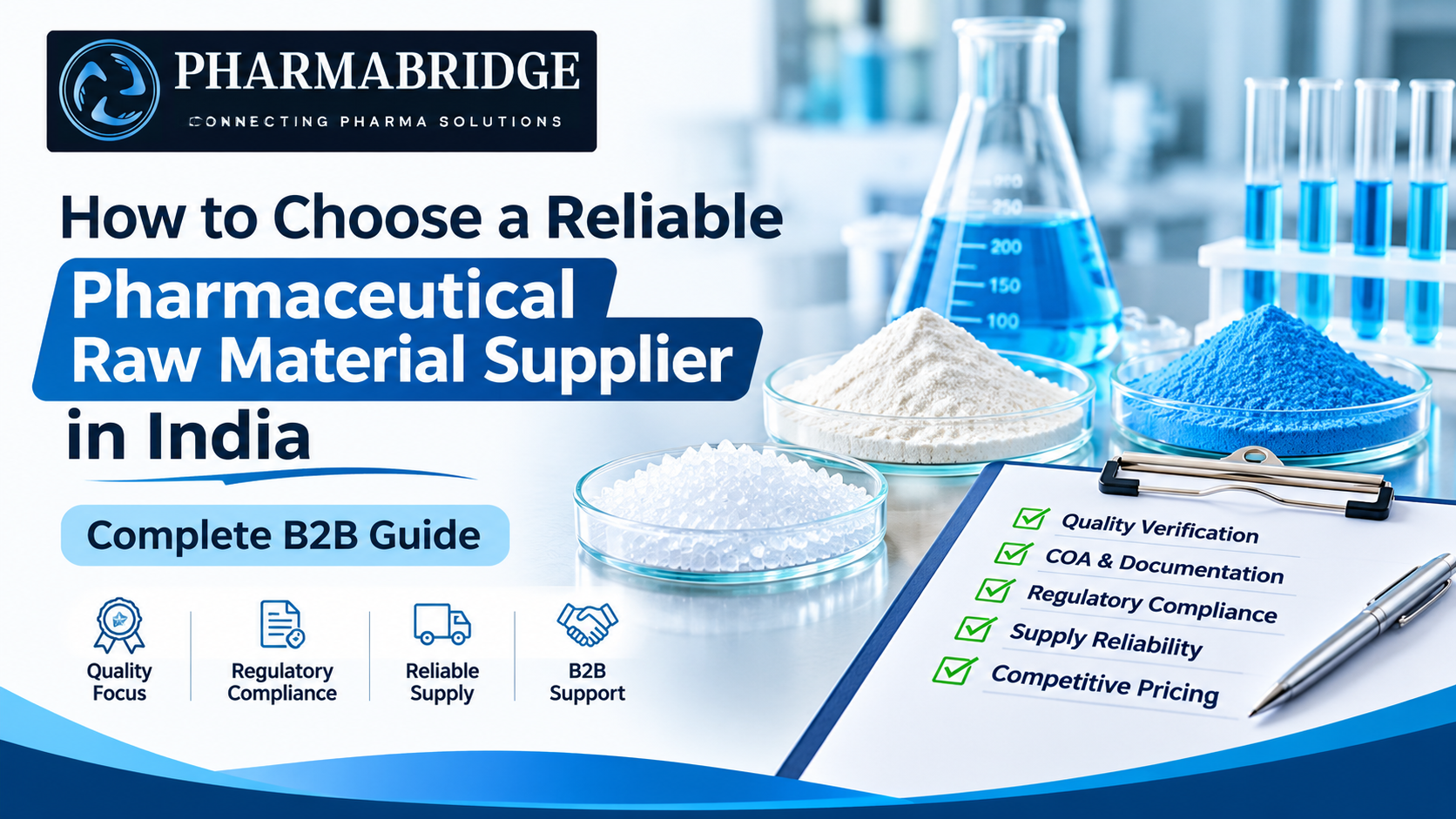
How to Choose a Reliable Pharmaceutical Raw Material Supplier in India: Complete B2B Guide
"Learn how to choose a reliable pharmaceutical raw material supplier in India with PharmaBridge. This B2B guide covers quality verification, COA documentation, regulatory compliance, competitive pricing, and supply reliability to help pharmaceutical businesses make informed sourcing decisions."
The pharmaceutical industry depends on the consistent availability of high-quality raw materials to support safe and reliable medicine manufacturing. From Active Pharmaceutical Ingredients (APIs) to excipients and pharmaceutical intermediates, every material plays an important role in the production process.
For pharmaceutical manufacturers, choosing a reliable supplier is not simply about finding competitive prices. It involves evaluating product quality, regulatory documentation, supply consistency, communication, and long-term business reliability.
India has a well-established pharmaceutical manufacturing and sourcing ecosystem, offering access to a wide range of raw materials. However, selecting the right supplier requires careful evaluation.
This guide explains how to choose a reliable pharmaceutical raw material supplier in India, the essential factors to consider, and the common mistakes businesses should avoid during procurement.
Why Choosing the Right Pharmaceutical Raw Material Supplier Matters
Pharmaceutical raw materials directly influence manufacturing processes, product quality, and regulatory compliance.
An unreliable supplier may create challenges such as inconsistent material specifications, delayed deliveries, incomplete documentation, and unexpected procurement costs.
These issues can disrupt production schedules and increase the burden on quality assurance teams.
A dependable pharmaceutical raw material supplier helps businesses establish a more predictable procurement process by providing accurate product information, appropriate documentation, transparent communication, and reliable supply coordination.
For pharmaceutical manufacturers, developing strong supplier relationships is an important part of maintaining operational efficiency and product quality.
1. Evaluate the Supplier's Industry Experience
Industry experience is an important consideration when selecting a pharmaceutical raw material supplier.
Suppliers familiar with pharmaceutical procurement generally understand the importance of product specifications, documentation requirements, packaging standards, and delivery timelines.
Before choosing a supplier, evaluate their experience with the materials your business requires.
A supplier handling pharmaceutical APIs, excipients, and intermediates should be able to explain product availability, sourcing arrangements, and documentation procedures.
Businesses should also review the supplier's professional background, customer communication, and ability to handle recurring procurement requirements.
Although experience alone does not guarantee quality, it can help identify suppliers with a better understanding of pharmaceutical supply chain expectations.
2. Verify Raw Material Quality and Specifications
Quality verification is one of the most important steps in pharmaceutical raw material procurement.
Before purchasing, confirm that the offered material meets your company's approved specifications and intended application.
Important considerations may include identity, purity, impurity limits, physical characteristics, and other relevant technical parameters.
The required specifications depend on the material and its intended use.
For example, an Active Pharmaceutical Ingredient may require different quality evaluations from a pharmaceutical excipient or chemical intermediate.
Buyers should request available technical information and review it with their quality assurance or quality control team.
Where appropriate, samples can be evaluated through an approved testing process before placing a larger order.
Never select pharmaceutical raw materials based only on price without confirming their suitability and quality requirements.
3. Check the Certificate of Analysis and Supporting Documents
Documentation is essential for assessing pharmaceutical raw materials.
A Certificate of Analysis (COA) provides information about the test results reported for a specific material batch or lot.
Depending on the material and procurement requirements, buyers may also need a Safety Data Sheet (SDS), technical specifications, origin information, or other relevant documents.
Why Is a COA Important?
A COA helps buyers compare reported batch test results against their approved material specifications.
However, a COA alone does not establish that a supplier is qualified or that a material is suitable for every pharmaceutical application.
The document should be reviewed for relevant test parameters, batch identification, and consistency with the supplied material.
Buyers should also confirm whether the documentation originates from the manufacturer or another authorised testing source.
Complete and traceable documentation supports better supplier evaluation and quality management.
4. Assess Regulatory and Quality Compliance
Pharmaceutical procurement requires attention to applicable quality standards and regulatory expectations.
The requirements vary depending on the type of material, its intended application, the manufacturing process, and the markets where the finished pharmaceutical product will be supplied.
For certain materials and manufacturing activities, Good Manufacturing Practice (GMP) requirements may be relevant.
Buyers should verify the actual manufacturer's quality credentials and applicable certifications rather than assuming that a distributor or sourcing company holds the same approvals.
Where necessary, request supporting information about manufacturing facilities, quality systems, and relevant regulatory status.
For Indian pharmaceutical businesses, applicable requirements may involve standards and regulations administered by the Central Drugs Standard Control Organisation (CDSCO) and other relevant authorities.
Supplier qualification should follow the purchasing company's established quality management procedures.
5. Evaluate Product Availability and Supply Consistency
Consistent availability is especially important for pharmaceutical manufacturers managing regular production schedules.
A supplier may offer competitive prices but still create operational difficulties if materials are frequently unavailable.
Before finalising a supplier, discuss expected order quantities, lead times, sourcing arrangements, and recurring supply requirements.
For businesses purchasing pharmaceutical raw materials in bulk, supply planning becomes particularly important.
A reliable sourcing partner should communicate availability clearly and provide realistic delivery expectations.
Buyers should also consider alternative sourcing arrangements for critical materials to reduce dependency on a single supply channel.
6. Compare Pricing Without Compromising Quality
Pricing is an important part of pharmaceutical raw material procurement, particularly for businesses managing large purchase volumes.
However, the lowest quotation does not always represent the best overall value.
Differences in material grade, packaging, testing requirements, documentation, transportation, and order quantities can influence the final procurement cost.
When comparing suppliers, ensure that quotations refer to equivalent specifications and commercial conditions.
A transparent quotation should clearly explain the offered product, quantity, price, delivery terms, and applicable charges.
For long-term procurement, predictable quality and dependable supply may provide greater business value than a small short-term price difference.
7. Review Packaging, Storage and Transportation Practices
Pharmaceutical raw materials may be sensitive to moisture, temperature, light, contamination, or unsuitable handling conditions.
Proper packaging and transportation are therefore important considerations during supplier evaluation.
Buyers should confirm that the proposed packaging is appropriate for the material and its documented storage requirements.
For materials requiring controlled conditions, discuss how those conditions will be maintained during storage and transit.
Packaging labels should support material identification and traceability, including relevant batch or lot information.
Suitable handling practices help reduce the risk of material damage and quality deterioration during transportation.
8. Check Communication and Customer Support
Effective communication is often overlooked when evaluating pharmaceutical raw material suppliers.
A supplier should respond clearly to enquiries about product specifications, documentation, availability, quotations, and delivery schedules.
For B2B pharmaceutical procurement, timely communication can help purchasing teams coordinate with production, quality control, and logistics departments.
Before establishing a long-term relationship, evaluate how efficiently the supplier handles technical and commercial questions.
Reliable communication becomes particularly valuable when dealing with urgent procurement requirements or unexpected supply changes.
9. Understand the Supplier's Sourcing Network
Not every pharmaceutical raw material supplier manufactures the products it sells.
Some companies operate as manufacturers, while others work as distributors, traders, or B2B sourcing partners.
Each business model can serve a useful role in pharmaceutical procurement.
A sourcing partner may help buyers identify materials from different manufacturers and coordinate commercial enquiries, documentation, and supply arrangements.
However, buyers should understand the supplier's actual role and request appropriate manufacturer information when required.
Transparency about material origin and supply chain responsibilities is important for maintaining traceability and supporting supplier qualification.
10. Start With a Proper Supplier Evaluation Process
Before placing a major bulk order, businesses should follow a structured supplier evaluation process.
Begin by sharing the required material name, grade, specifications, quantity, and delivery location.
Request a quotation along with available product documentation.
Next, review the supplier's credentials, manufacturer details, quality information, and commercial terms.
Where appropriate, complete sample testing, quality assessments, or supplier audits according to your company's procedures.
Once the supplier meets the required technical and commercial criteria, the procurement team can proceed with the purchasing process.
Periodic supplier performance reviews can help businesses monitor delivery reliability, documentation quality, and overall service.
Common Mistakes to Avoid When Selecting a Pharmaceutical Supplier
One common mistake is selecting a supplier entirely on the basis of low pricing.
Another is accepting product information without verifying specifications, batch documentation, or the material's source.
Businesses may also overlook delivery lead times, packaging requirements, and the supplier's ability to support repeat orders.
Failing to involve quality assurance personnel during supplier evaluation can create unnecessary compliance and operational risks.
To avoid these problems, pharmaceutical buyers should establish clear purchasing requirements and complete appropriate verification before approving a supplier.
How Pharma Bridge Supports Pharmaceutical Raw Material Sourcing
Finding suitable pharmaceutical raw materials can involve contacting multiple suppliers, reviewing specifications, comparing quotations, and coordinating procurement requirements.
Pharma Bridge operates as a B2B pharmaceutical raw material sourcing and supply partner, helping businesses connect with sourcing opportunities for pharmaceutical ingredients and related materials.
Rather than positioning itself as a pharmaceutical manufacturer, Pharma Bridge focuses on supporting raw material sourcing and procurement coordination.
Businesses looking for APIs, pharmaceutical intermediates, excipients, and other raw materials can share their requirements to explore suitable sourcing options, subject to availability and verification.
Manufacturers and procurement teams should continue to perform their own supplier qualification, documentation review, and material approval processes before purchasing.
Conclusion
Choosing a reliable pharmaceutical raw material supplier in India requires more than comparing prices or product availability.
Pharmaceutical businesses should evaluate material quality, technical specifications, documentation, applicable regulatory requirements, sourcing transparency, delivery reliability, and customer support.
A well-structured supplier selection process can help reduce procurement risks and support consistent manufacturing operations.
Whether your business requires APIs, excipients, pharmaceutical intermediates, or other raw materials, selecting a dependable sourcing partner is an important step toward building a more efficient supply chain.
Looking for pharmaceutical raw materials in India?
Connect with Pharma Bridge to discuss your B2B sourcing requirements and explore suitable raw material supply options.
Have Formulation or Sourcing Requirements?
Inquire directly regarding batch pricing, regulatory dossiers (DMF, CoA, VQ), and evaluation samples.